

Please note: This information is for educational purposes and should not replace the specific advice given by your surgical team.
Thyroid Surgery
This patient information guide provides an overview of thyroid surgery (thyroidectomy).
What is Thyroid Surgery?
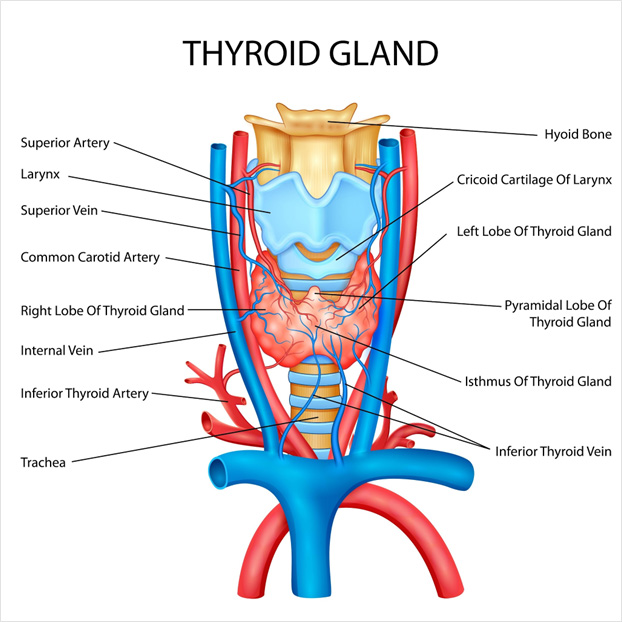
Thyroid surgery is the removal of all or part of the thyroid gland, a butterfly-shaped organ located at the base of your neck. This gland produces hormones that regulate your metabolism, heart rate, and body temperature.
1. Indications: Why is this surgery performed?
Your surgeon may recommend a thyroidectomy for several reasons:
- Thyroid Cancer: If you have a confirmed diagnosis of thyroid cancer or a biopsy result that is suspicious for cancer.
- Goiter (Enlarged Thyroid): If the entire gland is enlarged (multinodular goiter) and causes symptoms like difficulty swallowing, breathing issues, or a visible lump in the neck.
- Hyperthyroidism: If your thyroid is overactive (e.g., Graves’ disease or toxic nodules) and has not responded well to medication or radioactive iodine therapy.
- Thyroid Nodules: If you have cysts or solid nodules that are growing, causing symptoms, or are indeterminate (doctors cannot rule out cancer without surgery).
2. Types of Procedures
The extent of the surgery depends on the specific condition being treated.
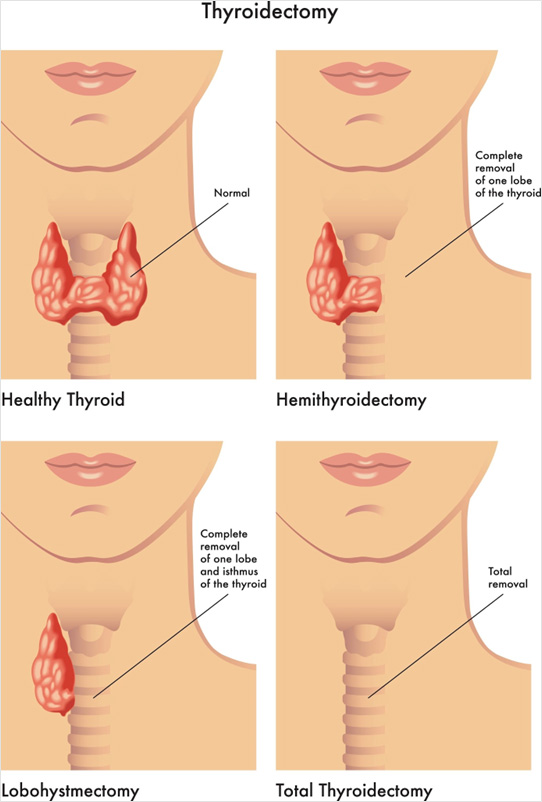
- Total Thyroidectomy: removal of the entire thyroid gland. This is the most common procedure for thyroid cancer or large goiters. You will need to take thyroid hormone replacement pills for the rest of your life after this surgery.
- Hemithyroidectomy (Lobectomy): Removal of one half (one lobe) of the thyroid. This is often done for a single suspicious nodule. The remaining half can often produce enough hormones, meaning you may not need daily medication.
- Isthmusectomy: Removal of only the bridge of tissue (isthmus) connecting the two lobes. This is rare and used only for small tumors located specifically in that area.
Role of Intra-Operative Nerve Monitoring (IONM)
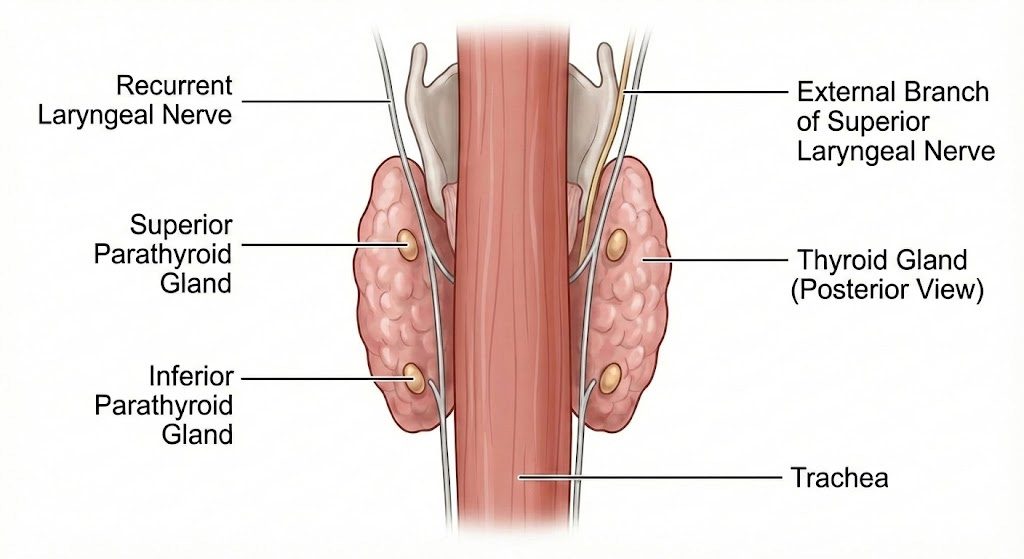
IONM uses specialized sensor electrodes attached to the breathing tube to deliver real-time acoustic and numerical feedback whenever the surgeon approaches or stimulates the recurrent laryngeal nerve. While it does not replace surgical skill, IONM helps mapping complex nerve pathways, verifying nerve function intactness before ending surgery, and reducing risk during re-operations or large goiter removals.
3. Benefits of Surgery
Cancer Cure/Control
It removes the primary source of cancer, allowing for further treatment if necessary.
Symptom Relief
It relieves pressure on the windpipe and esophagus, improving breathing and swallowing.
Hormonal Control
It resolves hyperthyroidism immediately, preventing long-term heart and bone damage associated with overactive thyroids.
Diagnosis
For suspicious nodules, it provides a definitive answer on whether cancer is present.
4. Risks and Complications
Thyroid surgery is generally very safe, but like all surgeries, it carries risks.
- Voice Changes (Recurrent Laryngeal Nerve Injury): The nerves controlling your voice box run very close to the thyroid.
- Temporary hoarseness is common (due to swelling) and usually resolves in weeks.
- Permanent voice changes (weak or raspy voice) occur in about 1% of cases.
- Low Calcium (Hypocalcemia): The parathyroid glands (which control calcium) sit behind the thyroid. They can be stunned or damaged during surgery.
- This causes tingling in the lips/fingers and muscle cramps.
- It is usually temporary and treated with calcium supplements, but can be permanent in rare cases.
- Bleeding (Hematoma): A rare but serious complication where blood collects in the neck, potentially pressing on the airway. This usually happens within the first 24 hours.
- Hypothyroidism: If the whole gland is removed, your body no longer makes thyroid hormone. You must take a daily pill (Levothyroxine) to replace it.
5. Recovery and Aftercare
Recovery Timeline
Hospital Stay: Usually overnight observation, though some patients go home the same day.
Return to Work: Most people return to desk jobs within 1–2 weeks.
Full Activity: Heavy lifting and strenuous exercise are usually restricted for 2–3 weeks to prevent bleeding.
What to Expect
Pain: You will have a sore throat and neck pain (like a bad muscle ache). This is usually manageable with over-the-counter pain relief or mild prescription painkillers.
The Incision: The cut is usually made in a natural skin crease to hide the scar. It may feel hard or “ridged” at first but will soften and fade over 6–12 months.
Swallowing: You may feel like you have a lump in your throat when swallowing; this is normal swelling and improves with time. Stick to soft foods (yogurt, soup, mashed potatoes) for the first few days.
Medications
Thyroid Hormone: If you had a total thyroidectomy, you will start this medication immediately.
Calcium/Vitamin D: You may be prescribed these for a few weeks to support your parathyroid glands.
When to Call Your Doctor
Seek medical attention immediately if you experience:
- Difficulty breathing or noisy breathing.
- Significant swelling in the neck that is getting larger.
- Tingling or numbness in your fingertips or around your lips (signs of low calcium).
- Fever over 38°C (100.4°F) or drainage/pus from the wound.
List of questions specifically to ask your surgeon during your consultation
Questions for Thyroid Surgeon
- Why are you recommending this specific procedure (total vs. partial)?
- How many thyroid surgeries do you perform annually?
- What is your personal complication rate for nerve injury and hypocalcemia?
- Will you use nerve monitoring during the surgery?
- Where will the incision be located, and how big will it be?
- Will I need to take thyroid hormone replacement for the rest of my life?
- What should I expect regarding my voice immediately after surgery?
- How long will I need to stay in the hospital?
- When can I resume normal activities, including work and exercise?
- What is the plan if cancer is found during or after the surgery?