

ESG is a non-surgical, incisionless procedure that reduces the size of your stomach.
Endoscopic Sleeve Gastropllasty (ESG)
Endoscopic Sleeve Gastropllasty (ESG) is a newer, less invasive option for significant weight loss. This procedure is performed through your mouth, without any surgical incisions.
What is Endoscopic Sleeve Gastroplasty (ESG)?
How it Works
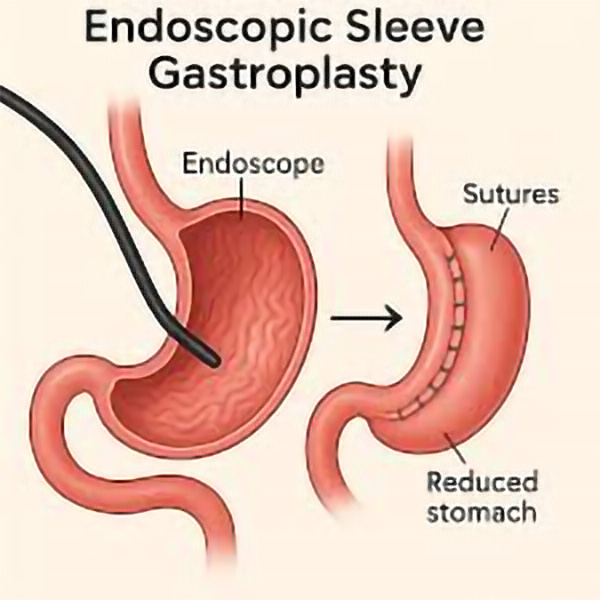
A flexible tube with a camera (an endoscope) and a suturing device is passed down your throat and into your stomach while you are under general anesthesia.
The “Accordion” Effect
The doctor uses the suturing device to place stitches internally, folding the walls of your stomach in on itself like an accordion.
The Result
This process reduces your stomach volume by approximately 70-80%, creating a smaller, tube-shaped pouch. This helps you feel full faster and limits how much you can eat.
How It's Performed: The Incisionless ESG Procedure
Understanding the process can help ease any anxiety you may have. The entire procedure is performed internally using specialized tools attached to an endoscope.
The Steps of ESG:
- General Anesthesia: You are asleep and comfortable for the entire procedure.
- Endoscope Insertion: A thin, flexible tube called an endoscope is gently passed through your mouth, down your esophagus, and into your stomach. This device has a light and a camera, allowing the specialist to see the inside of your stomach clearly on a monitor.
- The Suturing Device: A specialized endoscopic suturing system (like the OverStitch device) is attached to the end of the endoscope.
- Placing the Stitches: The doctor uses this device to place a series of full-thickness sutures (stitches) into the stomach wall.
- Creating the Sleeve: By cinching and securing these sutures, the stomach’s walls are brought together. This creates an internal fold and shortens the length of the stomach, effectively transforming the large, pouch-like stomach into a narrow, tube-like “sleeve.”
- Completion: The endoscope and device are removed, leaving no external scars.
ESG vs. Traditional Surgery: Key Advantages
Many patients choose ESG because it offers the benefits of stomach volume reduction with a less invasive approach compared to surgical options like traditional Gastric Sleeve (Sleeve Gastrectomy).
| Feature | Endoscopic Sleeve Gastroplasty (ESG) | Traditional Gastric Sleeve Surgery |
|---|---|---|
| Incision | None (Incisionless) | External incisions (typically laparoscopic) |
| Stomach Tissue | No tissue is removed. The stomach is reshaped. | A large portion of the stomach is permanently removed. |
| Recovery Time | Faster, typically 1–3 days to return to light activity. | Longer, typically several weeks. |
| Hospital Stay | Often an outpatient procedure or one overnight stay. | Usually 1–3 nights. |
| Reversibility/Revision | Considered revisable and does not restrict future options. | Permanent. |
Incision
ESG
None (Incisionless)
Traditional Sleeve
External incisions (typically laparoscopic)
Stomach Tissue
ESG
No tissue is removed. The stomach is reshaped.
Traditional Sleeve
A large portion of the stomach is permanently removed.
Recovery Time
ESG
Faster, typically 1–3 days to return to light activity.
Traditional Sleeve
Longer, typically several weeks.
Hospital Stay
ESG
Often an outpatient procedure or one overnight stay.
Traditional Sleeve
Usually 1–3 nights.
Reversibility/Revision
ESG
Considered revisable and does not restrict future options.
Traditional Sleeve
Permanent.
Am I a Candidate for ESG?
ESG is typically an option for individuals who meet specific health and commitment criteria.
BMI Range
Most often recommended for patients with a Body Mass Index (BMI) of 30 to 40, though individual assessments may vary
Previous Efforts
You have attempted to lose weight through diet and exercise programs without lasting success.
Commitment
You are ready and willing to commit to a long-term, medically supervised lifestyle change program (diet, exercise, behavioral therapy).
Suitability
You may not qualify for, or do not wish to undergo, traditional bariatric surgery.
What to Expect: Before and After
Preparing for Your Procedure (Pre-Op)
- Consultation: You will meet with a multidisciplinary team (doctor, nutritionist, psychologist) to ensure you are ready.
- Pre-Procedure Diet: You will be given specific instructions, which often include a liquid-only diet for a few days leading up to the procedure.
- Fasting: You must not eat or drink anything (including water) after midnight on the day of your procedure.
Recovery and Long-Term Success
- Immediate Recovery: You may feel some nausea or abdominal discomfort right after the procedure, which is managed with medication.
- Returning Home: Most patients return home the same day or the next morning. You must arrange for a friend or family member to take you home.
- Diet Progression: A strict, gradual diet plan is essential for healing and success. This typically moves from:
- Clear Liquids (Days 1-2)
- Full Liquids (Days 3-14)
- Puréed/Soft Foods (Weeks 3-4)
- Gradual return to a regular, healthy diet (Week 5 onwards)
Weight Loss: On average, patients can expect to lose 15% to 20% of their total body weight within 12 to 24 months, with continued adherence to lifestyle changes.
Risks and Complications
While ESG is considered a safe and low-risk procedure, it is important to understand potential issues.
- Common, Temporary Symptoms: Mild to moderate abdominal pain, nausea, and vomiting (usually managed with medication and resolve within days).
- Rare, Serious Complications: Bleeding, perforation (a tear in the stomach lining), or issues related to the anesthetic. Your care team will discuss all risks with you in detail.